What Is Ecofeminist Business Strategy?
the world is on fire. literally. figuratively.
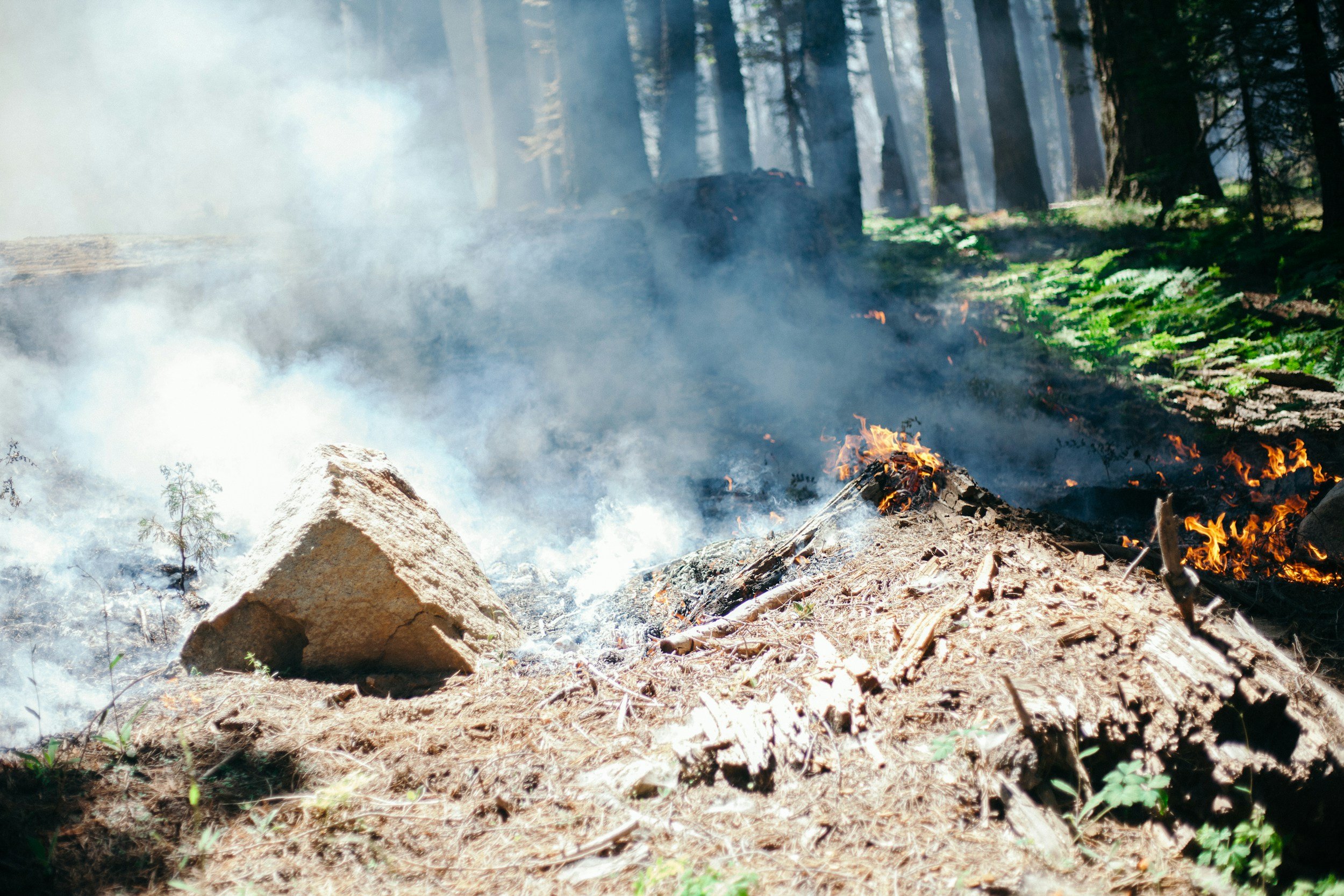
I spent last week in BC, visiting my husband's family. The entire region was so engulfed in smoke we only let our kids outside for an hour a day. The sky was hazy, the sun a bright red dot behind it. The beaches were empty. The mall and movie theaters were packed. I woke up every morning with my throat burning, and went to sleep every night with my head and sinuses throbbing.
The literal fires aren't a separate crisis from the figurative fire of burnout culture we're living in. They're the same fire. It's not two crises. It's one.
What ecofeminist theory has been saying for 50 years
The term "ecofeminism" was coined by French writer Françoise d'Eaubonne in her 1974 book Le Féminisme ou la Mort (Feminism or Death). Her argument: The domination of women and the exploitation of the earth come from the same root — men’s drive to control both.
I first encountered the idea of Ecofeminism through Vandana Shiva — a physicist turned activist who's spent decades fighting corporate control of the global food supply. Her version of ecofeminism argues that the domination of women and the destruction of nature come from the same patriarchal worldview — one that values control and profit over care and community.
In Grounded, Erin McMorrow argues the destruction of the earth and the destruction of the feminine are one and the same — you can't heal one without the other, because they were never actually two separate things.
At the heart of ecofeminism is this: A planet run on the assumption that nature exists for our consumption produces wildfire seasons. It also produces human burnout. Same root. Same fire.
How this shows up in wellness
I've been a business owner in the wellness space for 20 years — I ran a yoga studio, a wellness center and an online herbal apothecary. I was indoctrinated by hustle culture, where the point of a business is profit, as much of it as you can hoard.
Here's the part that's harder to sit with: this isn't just something done to us. we absorb it. and then we do it to each other.
Walk into almost any corner of the wellness industry and you'll find women enforcing the same extraction on other women — just with softer language. The guru positioning. The "I healed myself, why haven't you." The subtle shaming dressed up as marketing. The expert-talk that puts one woman above and everyone else below, in an industry built on the promise of care.
Capitalism doesn't need men in the room to keep running. Wellness has become one of the most efficient places for that role to get filled — because the language of care makes the extraction harder to see.
Audre Lorde said the master's tools will never dismantle the master's house. It's the master's tools again — just held by someone who looks like us.
Businesses built on a capitalist framework run on extraction — the same extraction that's turning our summers into wildfire season. it's not a metaphor. it's the same logic, applied to a body of water and a body of a woman and a body of clients.
Buckminster Fuller put it another way: “You don't change things by fighting the existing reality. You build a new model that makes the old one obsolete.”
I think we're at the point where we need a new system. you too?
Why Wildish is evolving
Wildish is evolving because I am. At the center Ecofeminist Business Strategy: your business is a living ecosystem, not a machine to optimize.
An ecosystem has seasons. It has rest that's built in, not earned. In an ecosystem, the health of the individual is inseparable from the health of the whole.
How we run our businesses is political. Owning one is a chance to say this is how I think the world should work. Your business makes a statement whether you intend it to or not.
If this is resonating, follow along.